When Design Execution Is Free, Taste Is Everything
I've been thinking about this a lot lately.
AI can generate a landing page in thirty seconds. It can produce a deck, a social graphic, a brand color palette, a logo concept. It can do in minutes what used to take days. And it's only getting faster.
So here's the question I keep coming back to: if execution is essentially free, what are you actually paying a designer for?
The answer, I think, is taste. And I don't mean taste in the soft, subjective, "I know it when I see it" sense. I mean something more specific and more learnable than that. I mean the accumulated judgment to know what to make, why it works, and when to break the rules that everyone else is following.
That's not something a prompt produces. It's something a designer earns, and it's becoming the only thing that actually separates good creative work from the flood of competent, forgettable output that AI makes possible at scale.
What taste actually is
Taste isn't a personality trait. It isn't something you either have or don't. It's a practice that’s built through deliberate exposure, deep study, intentional imitation, and eventually, the confidence to make your own moves.
Taste is about knowing what you want to say, and learning to say it in the right language for your audience. It's not about being born with an eye for beauty. It's about building a framework for judgment that you can apply consistently, even under pressure, even on a deadline, even when the client wants something trendy and you know it'll age badly.
From the design side: taste is what lets you walk into a room, look at a brand, and immediately understand not just what's wrong visually but why; what business problem the visual problem is creating, and what it would take to fix it in a way that holds together across every channel, every format, every touchpoint that matters.
That's a different skill than being able to execute a brief. And in a world where execution is increasingly automated, it's the skill worth paying for.
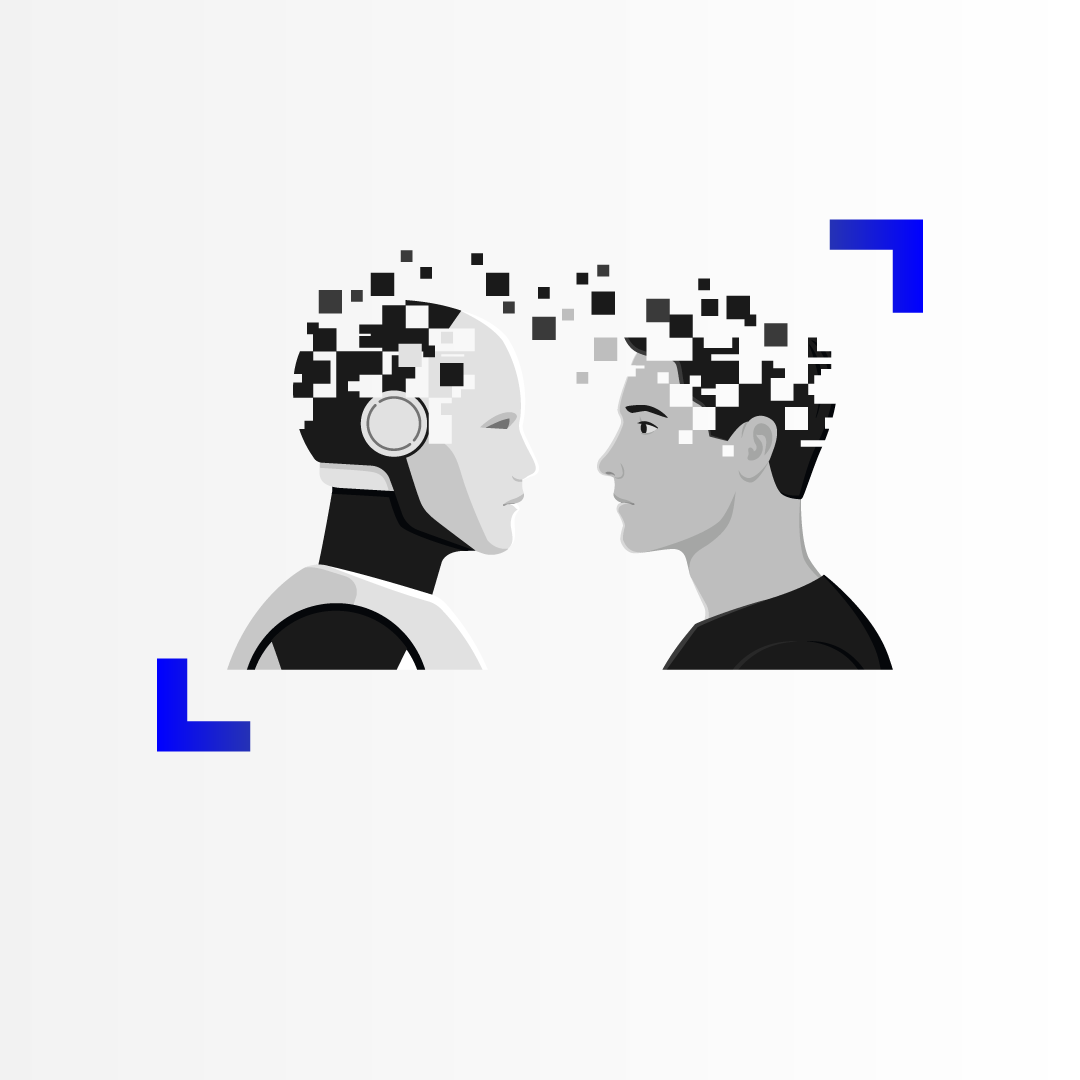
Why “Safe” AI Direction Is Risky for Your Brand
AI can generate endless design options, but in B2B marketing, your real advantage comes from human judgment, taste, and strategic decision-making.
How taste gets built
I didn't arrive at my aesthetic fully formed. Nobody does.
I spent years working in-house at B2B SaaS companies, sitting inside marketing teams, watching how design decisions got made and what happened downstream. I learned what a sales deck actually needs to do in a room full of skeptical executives. I learned what happens to a brand system when it's handed to a team without clear enough guidelines, how quickly it fragments, how hard it is to rebuild credibility once the inconsistency sets in.
I also spent a lot of time looking at things that had nothing to do with work. Museums, mostly. Art books, too. The kind of slow looking that doesn't produce anything immediately useful but builds up a reservoir of reference over time.
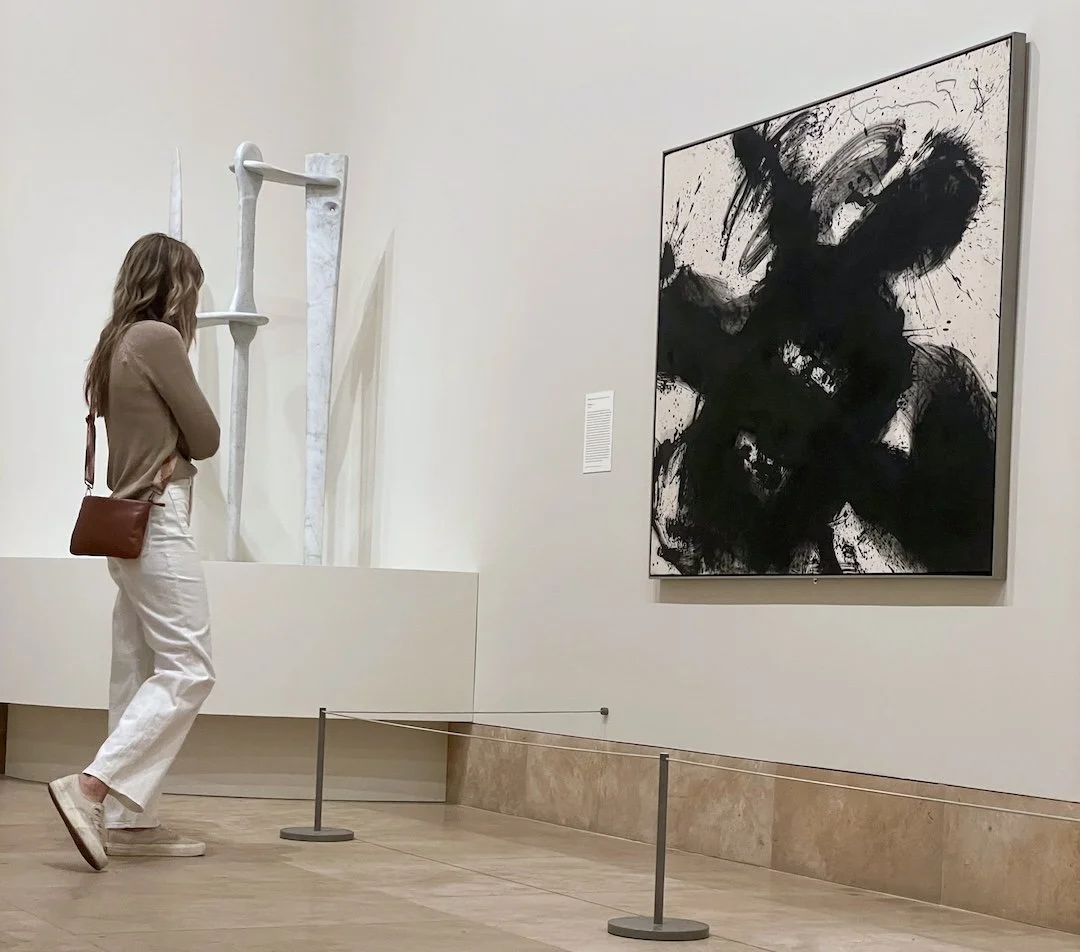
Beth viewing Untitled, Walasse Ting, 1959 | Norton Simon Museum
That accumulated looking is part of what I'm bringing to a brand work and multi-channel campaigns. Not a reference to a specific artwork, as that would be too literal, but the internalized understanding of why certain things work, translated into the visual language of enterprise software marketing.
Most B2B design doesn't need to be incredibly ambitious. But it benefits enormously from working with someone who can look at your brand and apply that kind of judgment about what's essential, what's noise, and what your visual language is actually communicating before anyone reads a word.
Why this matters for how you hire
If you're a marketing leader evaluating design partners right now, the portfolio question has shifted. It's not just "can they make something beautiful?" It's "do they have a point of view?"
There's a specific quality I'd look for. When you ask a designer why they made a particular design choice (ie: the color, the layout, or the image selection) do they have an answer that connects to something beyond personal preference? Can they trace the logic? Can they tell you what they were trying to communicate, what rules they were working within, and what they were consciously pushing against?
A designer with taste can answer those questions. A designer who's technically skilled but hasn't done the deeper work will tell you it "just felt right." That's not nothing, intuition matters, but intuition without a framework is hard to trust at scale, hard to communicate to team members and stakeholders, and hard to course-correct when it goes sideways.
The other thing to look for: does the designer have strong opinions about what not to do? Taste is as much about restraint as it is about vision. The ability to say "that's trending right now but it'll look dated in eighteen months, here's what I'd do instead" — and to be right about it — is one of the clearest signals that you're working with someone who has actually developed their eye, not just their execution speed.
What happens when taste is missing
I think about this whenever I see a brand that feels vaguely familiar. Usually it’s a website or campaign that's clearly been well-executed but somehow doesn't land. All the “correct” design elements are there, but nothing about it sticks.
Usually what's missing isn't craft. It's conviction. Somebody made a lot of competent decisions without ever deciding what they actually wanted to say. The brand is technically correct and aesthetically inoffensive and completely forgettable.
This is exactly the problem AI accelerates. If you don't bring taste to the prompt or to the editing process, you get the average of everything that's come before. You get a statistically reasonable output that resembles good design without the judgment that makes design actually work. It looks fine. It says nothing.
I've written more about this dynamic in the context of AI direction and brand risk, specifically why playing it safe with AI is often riskier than it looks. If you're relying on AI for creative output without a clear point of view guiding it, you're not saving time. You're just producing forgettable work faster.