The Strategic Playbook for High-Converting B2B SaaS Campaigns
Execution has never been easier. Strategy has never been more important.
AI tools can generate ads, landing pages, and campaign assets in minutes. But they can’t decide what’s worth communicating, what makes a company different, or what will actually drive action.
That’s where high-converting campaigns are won or lost.
The Real Job of Campaign Creative
Campaign creative isn’t decoration layered on top of strategy. It answers the questions every buyer asks, consciously or not:
Why should I care?
Why should I trust you?
Why should I act now?
If creative doesn’t answer these questions clearly and convincingly, the campaign won’t convert, no matter how much traffic it generates.
I’ve sat in countless meetings where CMOs rattle off a list of design assets—landing pages, ads, email sequences, webinar materials—without being able to answer a simple question: “What’s the business goal of this campaign?” Design often comes last, treated as production rather than strategy. I raise my hand and ask: What strategy is this checklist built on? What are we actually trying to accomplish?
Most campaigns start with outputs instead of outcomes, and that’s where they stall. High-performing campaigns flip the script. They start with one question: “What specific business outcome must this campaign drive?”
That outcome might be:
Generating qualified pipeline for a new product
Accelerating deals already in the funnel
Repositioning the company in a competitive market
Increasing conversion rates from existing traffic
When the business goal comes first, every creative decision leads to revenue-driven design.
Step 2: Define the One Idea the Campaign Must Communicate
Weak campaigns try to say everything. Strong campaigns focus the message on what matters most. Buyers don’t convert because they understand every feature; they convert because they understand the value.
Executive buyers, especially, aren’t evaluating functionality. They’re evaluating impact, risk, and confidence in the decision. They’re asking: “Will this move the business forward, and can I stand behind it?” Design plays a critical role in answering that question quickly, making the value clear and the decision easier to make.
Then that CTA should drive the production checklist: which landing pages, ads, emails, and assets are truly necessary, and how each piece supports the central message. Rather than creating more for the sake of volume, the checklist becomes a roadmap for executing only what drives conversion, ensuring every asset earns its place in the campaign.
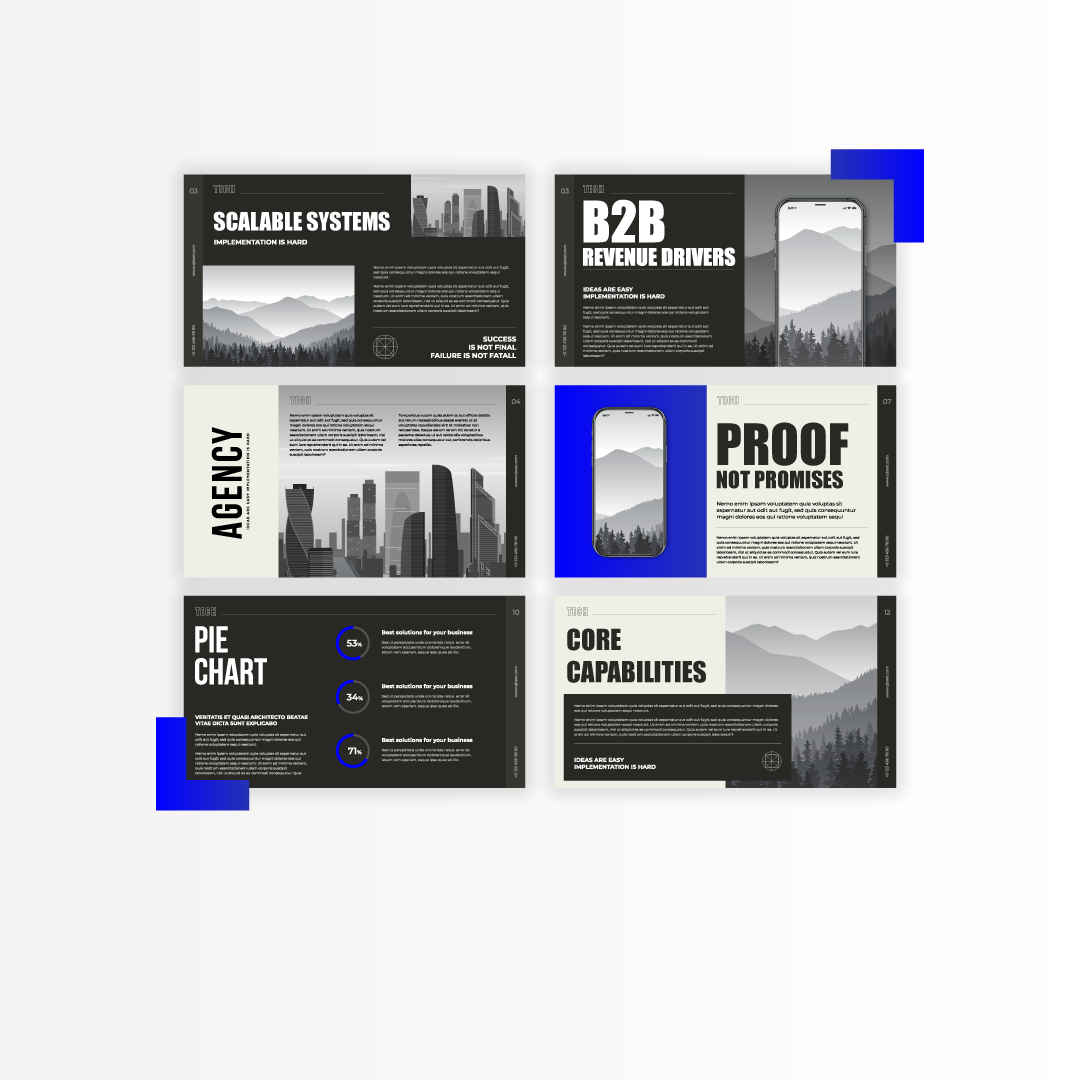
Why Strong Brand Design Shortens B2B SaaS Sales Cycles
Conversion-focused brand design and pitch deck strategy help executives understand value quickly, trust your company’s readiness, and make faster decisions, turning design into a driver of revenue, not just aesthetics.
Step 3: Design for Decision-Making, Not Attention
Attention is easy to get. Decisions are harder to influence. Many campaigns optimize for clicks, impressions, or engagement. These metrics measure visibility, not effectiveness. High-converting campaigns move buyers forward.
This requires creative that:
Reduces uncertainty
Increases perceived value
Builds credibility
Makes the next step feel obvious and low-risk
Every element should help the buyer answer: “Is this worth my time?” If the answer is yes, conversion follows.
Step 4: Treat Every Asset as Part of a System
Campaign performance isn’t determined by individual assets. It’s determined by how well those assets work together. Ads spark interest. Landing pages deepen understanding. Follow-up assets reinforce trust.
When these elements are disconnected, conversion suffers. When they operate as a unified system, performance improves.
This means ensuring consistency across:
Messaging
Visual language
Tone
Value proposition
Each touchpoint should reduce cognitive load, build momentum, and lead to the next step in the funnel. This is especially critical in B2B and SaaS, where buyers evaluate risk as much as value.
Step 5: Recognize That Creative Is a Competitive Advantage
In crowded B2B SaaS markets, products and messaging often start to look the same. When everyone is feeding similar prompts into LLMs and getting back variations like “clean typography,” “bold, minimal headlines,” “executive, high-intent, strategic,” differentiation disappears.
This is where creative becomes a true competitive advantage. Strategic, conversion-focused creative doesn’t just support campaigns, it drives them. That was exactly the case when an established, play-it-safe SaaS company needed to break into a next-generation market. Rather than sticking to familiar patterns, we paired bold visual language with an unexpected tone, breaking free of rigid brand guardrails while maintaining credibility.
The result? A campaign that didn’t just generate leads, it made the brand memorable in a space where most competitors simply echoed each other. This kind of creative advantage isn’t decoration; it’s deliberate strategic risk-taking that creates distinction, drives engagement, and accelerates results.
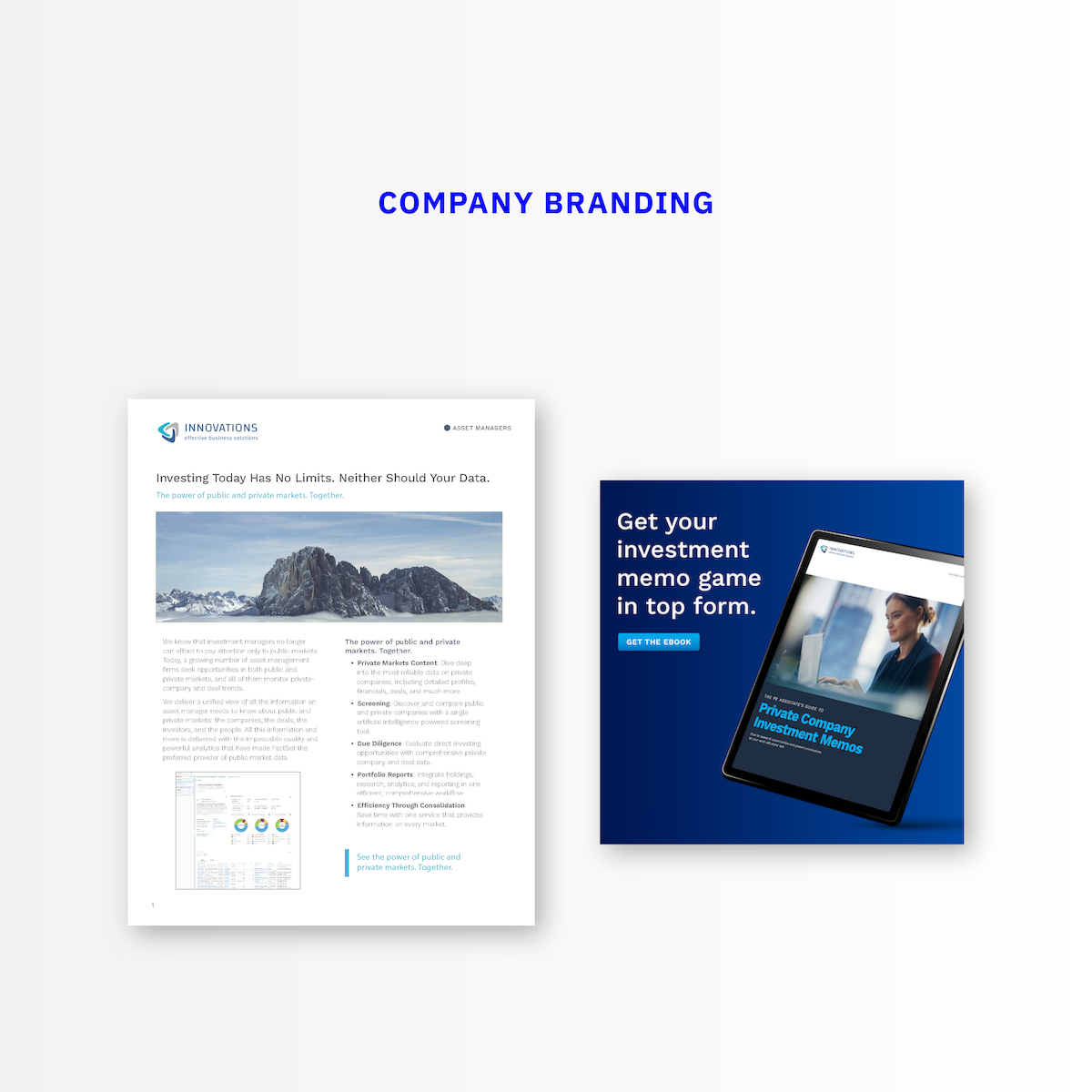
CASE STUDYCreative Strategy for a Fortune 500 Market Expansion
Navigating strict brand guidelines, we helped a Fortune 500 company launch a bold ad campaign and break into a new market.
Why Campaign Creative Has Outsized Impact on Performance
Creative influences every stage of the funnel:
It determines whether buyers engage
It shapes how they perceive value
It affects whether they trust the company
It influences whether they act
The highest-performing campaigns don’t rely on more distribution. They rely on more effective creative strategy.
The Shift From Production to Strategy
As tools make execution easier, strategy becomes the true differentiator. Volume isn’t the problem, anyone can generate endless options with AI. The real advantage comes from judgment, taste, and sustainability.
The brands that pull ahead aren’t producing the most assets; they’re making fewer, smarter decisions that are grounded in strategy, executed consistently across their ecosystem, and designed to last.
Campaigns that convert are the result of deliberate decisions around positioning, messaging, creative direction, and system design—choices that determine performance long before a single asset goes live.

Why “Safe” AI Direction Is Risky for Your Brand
AI can generate endless design options, but in B2B marketing, your real advantage comes from human judgment, taste, and strategic decision-making.
Strategy, judgment, and thoughtful creative are the levers that turn attention into pipeline, and pipeline into revenue.
To win in B2B SaaS, high-performing campaigns don’t just need assets, they need direction, intention, and creative that converts.
Ready for the CTA?
If you’re investing in growth, your B2B campaign strategy should be working as hard as the rest of your business. Let’s make creative your competitive advantage.